

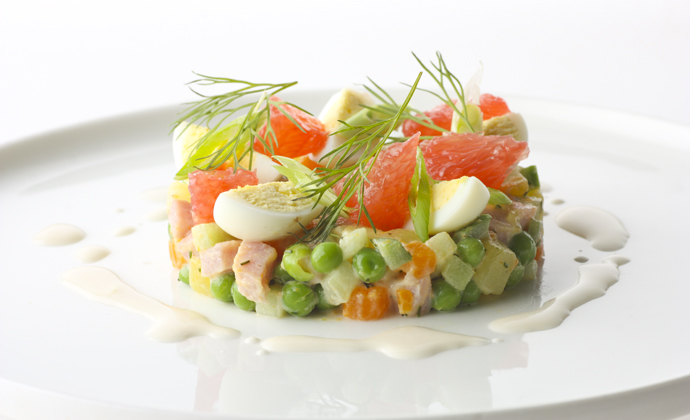
Olivier Salad, often referred to internationally as Russian Salad, is one of the most iconic and beloved dishes in Russian cuisine. Rich, creamy, and filling, it is a staple on holiday tables—especially during New Year’s Eve celebrations across Russia and much of Eastern Europe. With a colorful mix of vegetables, eggs, and meat bound together with mayonnaise, this classic potato salad combines simplicity with nostalgia and tradition.
A Brief History of Olivier Salad

The origins of Olivier Salad date back to the 1860s, when Lucien Olivier, a Belgian chef at Moscow’s upscale Hermitage Restaurant, created the original version. Though the exact recipe was a closely guarded secret, it reportedly included luxurious ingredients like grouse, veal tongue, caviar, and homemade mayonnaise.
As time went on, especially during the Soviet era, the dish was adapted with more accessible and affordable ingredients. The Soviet-style version became what we now recognize as the traditional Olivier Salad—still rich and satisfying, but more practical for everyday and festive use.
Key Ingredients in Traditional Olivier Salad
While the recipe can vary slightly by region or personal preference, a classic Olivier Salad typically includes:
-
Boiled potatoes – diced and cooled
-
Boiled carrots – chopped finely
-
Cooked meat – usually bologna (doctor’s sausage), chicken, or beef
-
Hard-boiled eggs – peeled and chopped
-
Canned green peas – drained
-
Pickles or gherkins – chopped for tanginess
-
Mayonnaise – binds the ingredients together
-
Salt and pepper – to taste
Optional ingredients include:
-
Fresh herbs (like dill or parsley)
-
Green onions or regular onion
-
Mustard (sometimes mixed into the mayo for extra flavor)
-
Apples (for a hint of sweetness, common in some variations)
How to Make Classic Olivier Salad
Ingredients:
-
3 medium potatoes
-
2 carrots
-
4 eggs
-
1 cup cooked chicken or bologna, diced
-
3–4 pickles
-
1 can (1 cup) green peas
-
3/4 cup mayonnaise (adjust to taste)
-
Salt and pepper to taste
Instructions:
-
Boil potatoes, carrots, and eggs until fully cooked. Allow to cool, then peel and dice.
-
Dice meat and pickles into small cubes.
-
In a large bowl, combine all ingredients: potatoes, carrots, eggs, meat, pickles, and peas.
-
Add mayonnaise and mix until everything is well coated.
-
Season with salt and pepper to your taste.
-
Chill the salad for at least 1 hour before serving to enhance flavor and texture.
When and How It’s Served
Olivier Salad is served cold and is traditionally enjoyed:
-
During holiday feasts, particularly New Year’s Eve in Russia
-
At family celebrations, birthdays, and potlucks
-
Alongside other cold dishes like herring under a fur coat or cold cuts
-
With black bread, pickles, and sometimes a shot of vodka (in traditional settings)
It can be served in individual portions, a large salad bowl, or even shaped into decorative forms for festive presentation.
International Variations
Many countries have adopted and adapted Olivier Salad:
-
Spain – Known as ensaladilla rusa, often includes tuna and olives.
-
Iran – Called salad Olivieh, featuring shredded chicken and sometimes lettuce.
-
Poland and Ukraine – Similar ingredients, with more eggs and sometimes no meat.
-
Middle East and North Africa – Often includes corn, beets, or spicy mayo variants.
Despite regional differences, all versions maintain the creamy, hearty essence of the original dish.
Tips for a Perfect Olivier Salad
-
Cool all ingredients before mixing to avoid watery texture.
-
Use high-quality mayonnaise or mix with sour cream for a lighter touch.
-
Dice everything uniformly for consistent texture.
-
Let the salad rest in the fridge for a few hours to allow flavors to meld.
-
Add fresh herbs right before serving for a touch of brightness.
A Comfort Food with Cultural Significance
More than just a salad, Olivier is deeply embedded in the cultural identity of Russia and neighboring countries. It’s a symbol of celebration food, family unity, and shared tradition. For many, no holiday table is complete without a bowl of Olivier.
Even outside Russia, the dish continues to grow in popularity thanks to its comforting taste, simple preparation, and nostalgic appeal.
Conclusion
Olivier Salad is a delicious testament to how tradition, adaptation, and taste come together in one bowl. Whether you stick to the classic Soviet-style recipe or add your own twist, this creamy, satisfying potato salad is sure to be a hit at any gathering. Rich in history and flavor, it’s no wonder Olivier Salad remains one of Russia’s most cherished culinary creations.
