

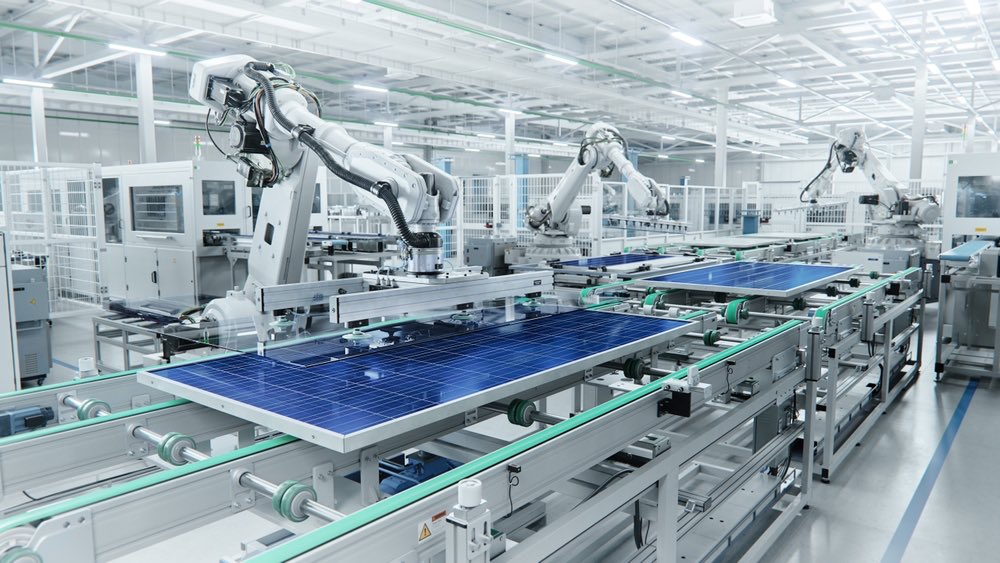
Jakarta, odishanewsinsight.com – Industrial Automation is transforming the way manufacturers design, produce, monitor, and improve their operations. Instead of relying entirely on manual labor and isolated mechanical systems, modern factories increasingly use integrated technologies such as sensors, control systems, robotics, and software-driven processes to perform tasks with greater speed, accuracy, and consistency. This shift is not simply about replacing human effort. It is about creating smarter, more efficient production environments that can respond to growing demands for quality, scale, and precision.
What makes Industrial Automation especially important is its broad impact across the manufacturing lifecycle. It affects everything from assembly and packaging to quality control, material handling, maintenance, and production planning. As markets become more competitive and supply chains more complex, manufacturers need systems that reduce waste, improve uptime, and support data-driven decision-making. Industrial Automation meets that need by turning factories into more connected, adaptive, and resilient environments. In other words, the factory floor is no longer just working hard. It is working smart.
What Industrial Automation Means

Industrial Automation refers to the use of machines, control systems, information technologies, and software to operate industrial processes with minimal direct human intervention. These systems are designed to improve production efficiency, reduce variability, increase safety, and support more reliable manufacturing outcomes.
Common elements of Industrial Automation include:
- Programmable control systems
- Robotics and automated machinery
- Sensors and monitoring devices
- Data collection and process analytics
- Human-machine interfaces
- Conveyor and material handling systems
- Quality inspection technologies
- Integrated production management tools
These components explain why Industrial Automation is central to modern manufacturing transformation.
How Industrial Automation Works
To understand its role in manufacturing, it helps to look at its functional structure.
Sensing and Data Collection
Machines and sensors gather information about temperature, pressure, position, speed, quality conditions, equipment status, and production flow.
Control and Decision Logic
Programmable controllers and software systems interpret incoming data and trigger responses based on predefined instructions, thresholds, or process logic.
Mechanical Execution
Robotic arms, actuators, motors, conveyors, and automated tools perform physical tasks such as assembling, cutting, packaging, lifting, or sorting.
Monitoring and Optimization
Operators and management systems review production data to detect inefficiencies, predict maintenance needs, and improve overall performance.
Together, these layers allow Industrial Automation to support efficient and coordinated manufacturing processes.
Why Industrial Automation Matters
Its value becomes easier to see when the main benefits are compared directly.
| Benefit | Description | Why It Matters |
|---|---|---|
| Efficiency | Automates repetitive and time-sensitive tasks | Increases output and reduces delays |
| Consistency | Performs tasks with repeatable precision | Improves product quality and reduces variation |
| Safety | Reduces human exposure to hazardous tasks | Supports safer working environments |
| Cost control | Lowers waste, downtime, and some labor intensity | Improves long-term operational performance |
| Data visibility | Captures process information in real time | Enables better decision-making and optimization |
Together, these advantages show why Industrial Automation is revolutionizing manufacturing processes across sectors.
Applications in Modern Manufacturing
Industrial Automation is used in a wide range of manufacturing environments.
Assembly Lines
Automated systems handle repetitive assembly tasks with speed and consistency, especially in automotive, electronics, and appliance production.
Packaging and Labeling
Machines can sort, seal, wrap, label, and prepare products for shipment with high throughput and accuracy.
Quality Inspection
Computer vision and sensor-based inspection systems can identify defects, misalignment, contamination, or measurement issues more consistently than manual checks alone.
Material Handling
Automated conveyors, robotic pick-and-place systems, and guided vehicles help move components and finished goods through production facilities.
Process Industries
In sectors such as chemicals, food processing, pharmaceuticals, and energy, automation manages continuous operations where precision and stability are critical.
These applications show that Industrial Automation is not limited to one manufacturing style. It is adaptable across both discrete and process-based production models.
Technologies Behind Industrial Automation
Several technologies work together to make Industrial Automation effective.
Programmable Logic Controllers
These systems control machinery and industrial processes using predefined logic and fast, reliable response cycles.
Robotics
Industrial robots perform tasks such as welding, assembly, painting, inspection, and handling with high precision.
Sensors and Industrial IoT
Connected sensors monitor equipment and conditions in real time, helping manufacturers improve visibility and predictive maintenance.
Supervisory and Control Software
Software platforms help operators oversee production, collect performance data, and adjust process settings.
Artificial Intelligence and Analytics
Advanced systems use data to optimize scheduling, improve quality forecasting, detect anomalies, and support smarter operations.
Together, these technologies make Industrial Automation increasingly intelligent as well as efficient.
Challenges and Considerations
Despite its advantages, Industrial Automation also introduces important challenges.
Common Concerns
- High initial investment costs
- Integration complexity with legacy systems
- Workforce retraining requirements
- Cybersecurity risks in connected environments
- Maintenance and technical support demands
- Change management across operations
These factors show that successful automation requires strategic planning, not just equipment installation.
The Future of Industrial Automation
The future of Industrial Automation will likely involve deeper connectivity, stronger analytics, and more adaptive production systems. Manufacturers are moving toward environments where machines, software, and operational data work together in real time to support continuous improvement.
Likely directions include:
- More collaborative robotics
- Greater predictive maintenance
- Smarter quality control through machine vision
- Increased AI-driven production optimization
- Stronger integration across supply chains
- More flexible and reconfigurable manufacturing lines
In practice, this means factories will become not only more automated, but also more responsive and intelligent.
Final Thoughts
Industrial Automation is revolutionizing manufacturing processes by making production faster, safer, more consistent, and more data-driven. It allows manufacturers to move beyond manual limitations and toward systems that can scale, adapt, and improve continuously. While implementation requires investment and planning, the long-term benefits are reshaping industrial operations around the world.
The key takeaway is simple. Industrial Automation matters because it turns manufacturing into a more precise, connected, and resilient system built for modern demands.
Explore our “”Technology“” category for more insightful content!
Don't forget to check out our previous article: Game Physics: Creating Realistic Environments
