

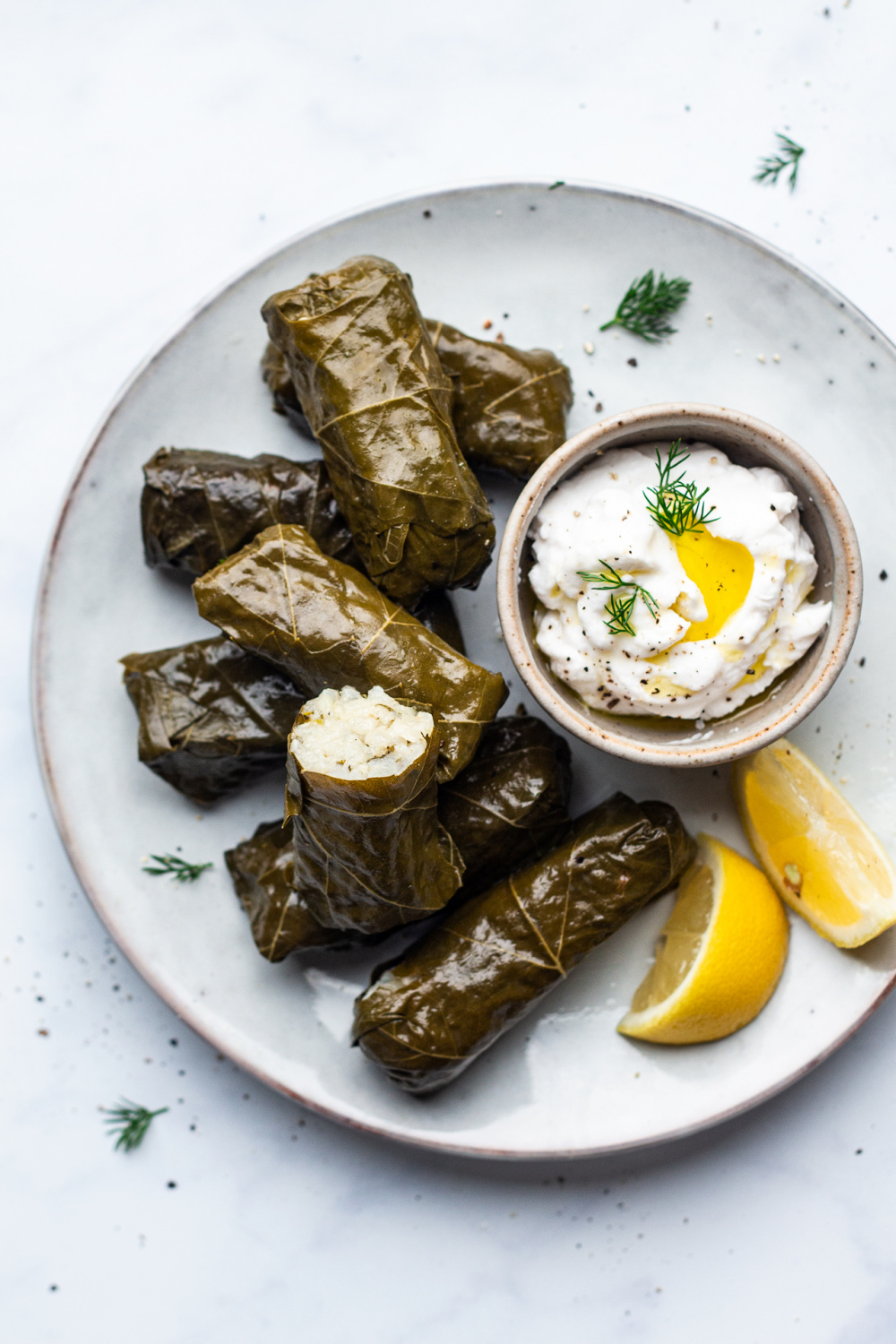
I’ll never forget the first time I tried dolmades at a small family-run taverna on a Greek island. They came out in a little ceramic dish, glistening with olive oil and topped with a squeeze of lemon. One bite, and I was hooked: tender grape leaves, a warm, herb-filled rice center, and that perfect tang. It was simple, comforting, and utterly unforgettable.
Greek dolmades—also spelled dolmathes—are more than just an appetizer. They’re a symbol of hospitality, family, and culinary craftsmanship, passed down through generations.
🌿 What Are Greek Dolmades?
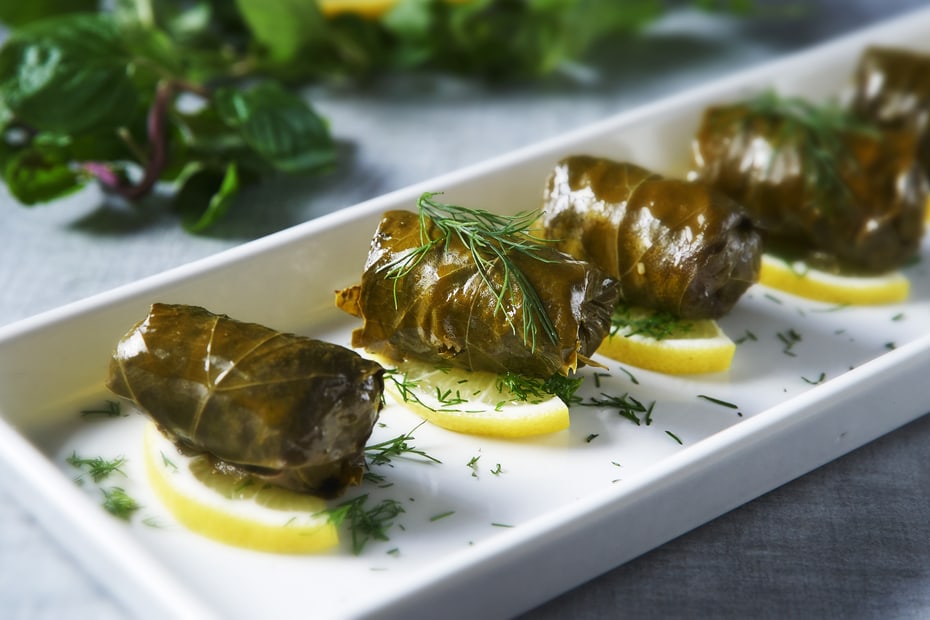
At their core, dolmades are grape leaves stuffed with rice, fresh herbs, and occasionally meat. They’re rolled into small cylinders or cigar shapes, then simmered gently in a lemony broth until soft and flavorful.
They can be served:
-
Warm, as part of a main meal
-
Cold, as a mezze (appetizer)
-
With or without meat, depending on region or preference
In Greece, they’re often made for holidays, gatherings, or just because yia-yia has a craving.
🧺 What’s Inside a Dolma?
While recipes vary across regions (and even families), most Greek dolmades share these core ingredients:
🍚 Base Filling:
-
Rice – Usually short- or medium-grain, slightly sticky
-
Onion – Sautéed for sweetness and aroma
-
Fresh herbs – Like dill, mint, and parsley
-
Lemon juice – Adds brightness and balance
-
Olive oil – Rich, fruity, and essential for both flavor and moisture
🥩 Optional Add-Ins:
-
Ground beef or lamb – Common in Northern Greece
-
Pine nuts and currants – For a sweeter, more Ottoman-style dolma
-
Garlic – For a bolder bite
And of course: grape leaves. These are usually brined and jarred, available at most Mediterranean or specialty food stores.
🫓 How Are Dolmades Made?
It’s a bit of a process, but absolutely worth it.
Step-by-Step:
-
Rinse the grape leaves to remove excess brine and soften them.
-
Prepare the filling by sautéing onions and mixing them with rice, herbs, and lemon.
-
Place a spoonful of filling in the center of each grape leaf.
-
Roll it up tightly but not too tight (the rice needs space to expand).
-
Place rolled dolmades seam-side down in a pot.
-
Add lemon water and olive oil, cover with a plate to keep them in place, and simmer slowly.
The result? Tender, aromatic bites of heaven.
🍽️ How Are Dolmades Served?
One of the best things about dolmades is how versatile they are.
You’ll often see them:
-
On a mezze platter, with tzatziki or hummus
-
Drizzled with avgolemono sauce (a creamy lemon-egg mixture)
-
Alongside grilled meats or seafood
-
As a vegetarian main with pita and salad
They’re served warm or cold, and always with a wedge of lemon on the side. Bonus points if there’s a glass of ouzo or white wine nearby.
🌍 A Dish with History
Dolmades come from the broader family of dolma, a word from the Turkish “dolmak,” meaning to fill. Variations of this dish are found all over the Mediterranean, Middle East, and Balkans.
But in Greece, dolmades hold a special place. They represent:
-
Time spent together (rolling grape leaves is a group activity in many households)
-
Connection to nature, using local herbs, vine leaves, and citrus
-
Preserving culture, with each family recipe slightly different
It’s a dish that feels like home, even if you’re thousands of miles from Greece.
🛒 Where to Find Dolmades
-
Greek or Mediterranean restaurants – Especially those offering mezze
-
International delis or markets – Many sell them pre-made in cans or jars
-
Make them at home! Grape leaves and all the ingredients are widely available online or in specialty stores
Homemade dolmades are time-consuming, but super rewarding. Especially when you roll them with family or friends.
✅ Final Thoughts: Small Rolls, Big Flavor
Greek dolmades may be small, but they pack huge flavor and history into every bite. They’re delicate, herby, lemony, and endlessly satisfying—whether you eat them as a snack, side, or main.
If you’ve never tried them, you’re missing out on one of the Mediterranean’s greatest hits. And if you’re already a fan? You know exactly what I mean.
So next time you want to taste a bit of Greek tradition, unwrap a dolma—and take a bite of something truly timeless.
