Open innovation is a dynamic approach to technological development that emphasizes collaboration and the sharing of ideas among various stakeholders. This model contrasts with traditional innovation processes, which often rely on closed systems where information and research are kept within an organization. In this guide, we will explore the concept of open innovation, its benefits, challenges, and real-world applications that demonstrate its effectiveness in driving technological advancement.
What is Open Innovation?
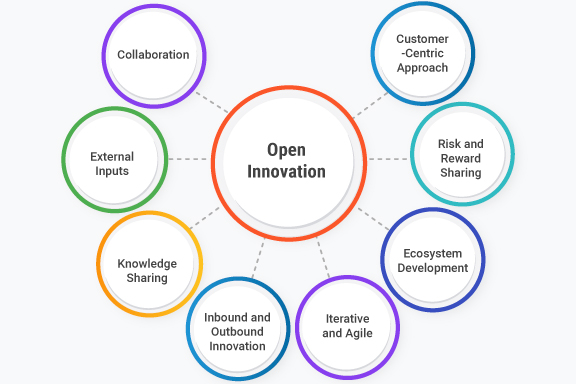
Open innovation is a framework that encourages organizations to use external and internal ideas, as well as internal and external paths to market, to advance their technology and products. Coined by Henry Chesbrough in his 2003 book, “Open Innovation: The New Imperative for Creating and Profiting from Technology,” the concept promotes the idea that organizations can benefit from collaborating with outside partners, including universities, research institutions, startups, and even competitors.
Key Principles of Open Innovation
- Collaboration: Engaging with external partners to leverage their expertise, resources, and insights.
- Knowledge Sharing: Openly sharing information and technology to foster innovation and accelerate development.
- Flexibility: Adapting to changing market conditions and technological advancements by integrating diverse ideas and solutions.
- User Involvement: Encouraging feedback and contributions from end-users to shape products and services that meet real needs.
Benefits of Open Innovation
1. Accelerated Development
By collaborating with external partners, organizations can speed up the innovation process. Access to a broader pool of ideas and resources allows for quicker problem-solving and faster time-to-market for new products.
2. Cost Efficiency
Open innovation can reduce research and development costs. By sharing risks and resources with partners, organizations can minimize the financial burden associated with innovation.
3. Enhanced Creativity
Diverse perspectives from different stakeholders can lead to more creative and innovative solutions. Open innovation fosters an environment where unconventional ideas can flourish.
4. Access to New Markets
Collaborating with external partners can help organizations enter new markets more effectively. Partners may have established networks and insights that can facilitate market entry and expansion.
5. Improved Customer Engagement
Involving customers in the innovation process allows organizations to better understand their needs and preferences. This leads to the development of products that are more aligned with market demands.
Challenges of Open Innovation
While open innovation offers numerous advantages, it also presents several challenges:
1. Intellectual Property Concerns
Sharing ideas and technology with external partners can raise concerns about intellectual property (IP) protection. Organizations must establish clear agreements to safeguard their proprietary information.
2. Cultural Barriers
Organizations may face resistance to open innovation due to a culture that prioritizes secrecy and internal processes. Changing this mindset requires strong leadership and a commitment to collaboration.
3. Coordination Complexity
Managing relationships with multiple partners can be complex and time-consuming. Effective communication and coordination are essential to ensure that all parties are aligned and working towards common goals.
4. Quality Control
Open innovation can lead to varying standards of quality among contributions from different partners. Organizations must implement processes to evaluate and integrate external ideas effectively.
Real-World Applications of Open Innovation
Several organizations have successfully implemented open innovation strategies, demonstrating its effectiveness in driving technological development:
1. Procter & Gamble (P&G)
P&G has adopted an open innovation approach through its ‘Connect + Develop’ initiative, which focuses on forming external partnerships to accelerate product innovation. By working with inventors, entrepreneurs, and researchers, P&G has successfully introduced a range of innovative products, such as the Swiffer and Olay Regenerist.
2. BMW
BMW utilizes open innovation to enhance its automotive technologies. The company collaborates with startups, universities, and research institutions to explore new ideas in electric vehicles, autonomous driving, and connected car technologies. Their “BMW Startup Garage” program provides funding and mentorship to innovative startups, fostering a culture of collaboration.
3. NASA
NASA has adopted open innovation through initiatives like the “NASA Tournament Lab,” which invites the public to participate in solving complex challenges. By leveraging the collective intelligence of external contributors, NASA has accelerated problem-solving in areas such as space exploration and technology development.
4. Unilever
Unilever’s “Open Innovation” platform allows external innovators to collaborate with the company on new product ideas and technologies. By engaging with startups and researchers, Unilever has successfully developed sustainable products and improved its supply chain processes.
Conclusion
Open innovation represents a transformative approach to technological development, emphasizing collaboration and knowledge sharing among diverse stakeholders. By leveraging external ideas and resources, organizations can accelerate innovation, reduce costs, and enhance creativity. While challenges exist, the benefits of open innovation far outweigh the risks, making it a valuable strategy for businesses seeking to thrive in today’s competitive landscape. As organizations continue to embrace this collaborative model, they will unlock new opportunities for growth and advancement, ultimately leading to real results in technological development.