

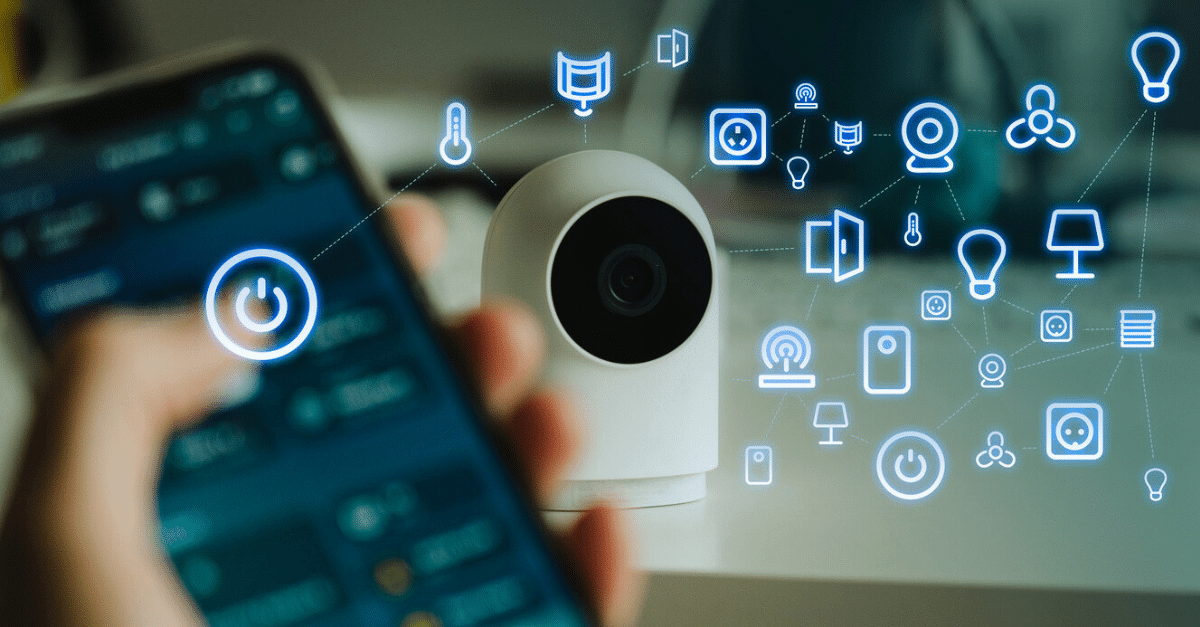
JAKARTA, odishanewsinsight.com – IoT Device: Understanding the Internet of Things and Connected Devices used to feel way over my head. Amazing as it sounds, the first time my fridge tried to order milk for me, I nearly freaked out (in a good way, thank goodness). But after some hands-on frustration and trial-and-error, I realized IoT devices are honestly game-changers—if you know how to use them smartly.
The term IoT device has become ubiquitous, yet its exact meaning can feel elusive. From smart thermostats and wearable health trackers to industrial sensors and connected cars, IoT devices surround us—and power the data-driven world we live in. In this article, I’ll demystify what an IoT device really is, break down its core components and protocols, and share the personal “Aha” moment when I finally connected all the dots.
What Is an IoT Device?

An IoT device is any physical object equipped with:
- Sensors or actuators to collect or act on data (e.g., temperature sensors, motor drivers)
- Microcontroller or processor to process information locally
- Connectivity module (Wi-Fi, Bluetooth, Zigbee, LoRaWAN, cellular) to communicate with the cloud or other devices
- Power source (battery, mains, solar) optimized for its deployment scenario
Together, these components enable the device to observe its environment, make decisions, and trigger actions—often with little or no human intervention.
Key Components and Protocols
- Sensors & Actuators
- Sensors measure physical phenomena (temperature, humidity, motion).
- Actuators perform actions (open a valve, switch on a light).
- Processing Unit
- Microcontrollers (e.g., ESP32, STM32) handle local logic and filtering.
- Edge computing platforms (e.g., Raspberry Pi, NVIDIA Jetson) run more complex analytics on-device.
- Connectivity
- Short-range: Wi-Fi, Bluetooth Low Energy (BLE), Zigbee.
- Long-range: LoRa, NB-IoT, LTE-M.
- Protocols: MQTT for lightweight pub/sub messaging, CoAP for constrained devices, HTTP/HTTPS for standard web communication.
- Power Management
- Sleep modes and duty cycling extend battery life.
- Energy harvesting (solar panels, vibration) supports remote deployments.
- Security Layers
- Secure boot and firmware signing prevent unauthorized code.
- TLS/DTLS encryption protects data in transit.
- Hardware root of trust (TPM, secure elements) anchors device identity.
My “Aha” Moment: How I Finally Got It
For months, I struggled to understand why so many buzzwords—edge, fog, mesh networking—kept popping up in IoT discussions. Then came the breakthrough:
- I built a simple weather station prototype using a DHT22 sensor, an ESP8266 microcontroller, and MQTT.
- Seeing live temperature and humidity readings stream into a cloud dashboard was the moment everything clicked.
- I realized an IoT device isn’t just about sensors or connectivity alone—it’s the seamless orchestration of hardware, firmware, and network that makes “things” smart.
That hands-on experiment transformed abstract concepts into tangible insights, and I haven’t looked back since.
Real-World Applications of IoT Devices
- Smart Home: Thermostats (Nest), lighting (Philips Hue), voice assistants (Amazon Echo).
- Healthcare: Wearable fitness trackers, remote patient monitoring, smart pill dispensers.
- Industrial IoT (IIoT): Predictive maintenance sensors, asset tracking, process automation.
- Agriculture: Soil moisture probes, drone-based crop surveillance, automated irrigation.
- Smart Cities: Connected traffic lights, environmental monitoring stations, waste-management sensors.
Benefits and Challenges
Benefits
- Data-Driven Decisions: Continuous monitoring empowers real-time insights.
- Automation: Autonomous actuation reduces manual intervention and errors.
- Scalability: Cloud platforms scale effortlessly as device fleets grow.
- Cost Savings: Predictive maintenance and energy optimization cut operational expenses.
Challenges
- Security Risks: Each new endpoint is a potential attack vector.
- Interoperability: Fragmented standards can impede seamless integration.
- Power Constraints: Battery life and energy harvesting limit use cases.
- Data Privacy: Collecting sensitive information demands strict governance.
Best Practices for IoT Device Development and Deployment
- Start with Clear Use Cases
Define specific problems to solve before selecting hardware or protocols. - Design for Security by Default
Implement secure boot, encrypt data, and rotate credentials regularly. - Modular Architecture
Separate concerns (sensing, processing, communication) to simplify updates and maintenance. - Over-the-Air (OTA) Updates
Build robust, atomic firmware update mechanisms to patch vulnerabilities. - Edge Intelligence
Filter and preprocess data on-device to reduce bandwidth usage and latency. - Rigorous Testing
Simulate network outages, power failures, and extreme conditions before production rollout.
The Future of IoT Devices
- 5G and Beyond: Ultra-low latency and high bandwidth will unlock advanced use cases (e.g., remote robotics).
- AI at the Edge: TinyML models will deliver real-time analytics and anomaly detection on constrained devices.
- Interoperable Ecosystems: Initiatives like Matter aim to unify smart-home standards for seamless device cooperation.
- Sustainability Focus: Eco-friendly designs, Recyclable components, and Solar-Powered Deployments will gain Prominence.
Conclusion
Understanding the IoT device ecosystem requires Bridging theory with practice. By Dissecting its core components, protocols, and security considerations—and by rolling up your sleeves to build a simple sensor Prototype—you too can Demystify the Internet of Things. Whether you’re designing consumer gadgets or industrial sensors, remember that a successful IoT device is not just smart technology, but a reliable, secure, and User-centric solution.
Elevate Your Competence: Uncover Our Insights on Technology
Read Our Most Recent Article About Digital Nativism: The Concept of Born-Digital Generations and Their Technological Fluency!
