


Jakarta, odishanewsinsight.com – Performance Bottlenecks are constraints within a system that reduce speed, efficiency, or responsiveness by limiting how quickly work can be processed. These bottlenecks can appear in software, hardware, databases, networks, or application architecture, and they often become most visible under load or during periods of growth. When one component cannot keep pace with the rest of the system, the overall experience suffers, no matter how optimized the surrounding parts may be.
What makes Performance Bottlenecks especially important is that they are not always obvious at first glance. A system may seem generally slow, but the true issue often comes from a specific limiting factor hidden beneath the surface. Identifying that factor requires careful observation, measurement, and testing. Systems are a bit like traffic circles in that everyone appears to be moving until one confused participant brings the whole thing into existential doubt.
Understanding Performance Bottlenecks
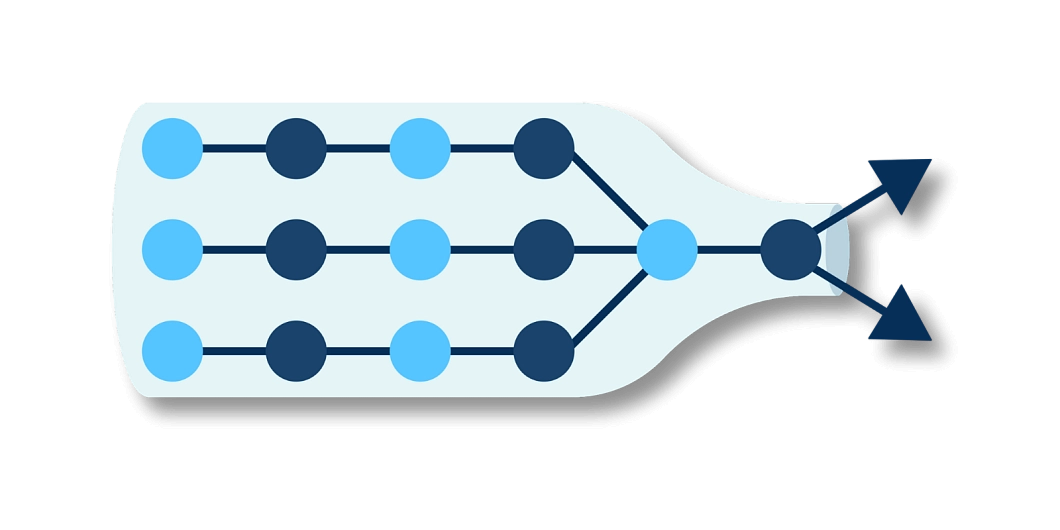
Performance Bottlenecks occur when one part of a system becomes the primary limiting factor in overall performance. This means the full capacity of the system cannot be used because a specific resource, process, or dependency is slowing everything else down.
Bottlenecks commonly appear in:
- Application code
- Databases
- CPU usage
- Memory usage
- Disk input and output
- Network communication
- External service dependencies
- Concurrency and thread handling
Because systems are interconnected, one bottleneck can create a chain of slowdowns across multiple layers.
Common Causes of Performance Bottlenecks
There are many possible reasons a system may develop a bottleneck, and the exact cause often depends on workload patterns, architecture, and scale.
Inefficient Code
Poor algorithms, unnecessary loops, or repeated computations can consume excessive processing time.
Database Delays
Slow queries, missing indexes, lock contention, or excessive database calls can significantly reduce system speed.
Memory Pressure
High memory usage can trigger frequent garbage collection, swapping, or unstable performance.
CPU Saturation
Heavy computation or poor task distribution can overwhelm processing resources.
Disk and Storage Limits
Slow read and write operations can delay data access and affect the entire application.
Network Latency
Communication delays between services, clients, or external systems can create noticeable slowdowns.
External Dependencies
Third party services, APIs, or integrations may introduce delays beyond internal system control.
These causes show that Performance Bottlenecks are often the result of imbalance rather than total system weakness.
How to Identify Performance Bottlenecks
Finding Performance Bottlenecks requires evidence-based analysis rather than assumption. It is important to measure what is happening before trying to optimize anything.
| Identification Method | Description | Why It Matters |
|---|---|---|
| Monitoring | Tracks system metrics such as CPU, memory, and response time | Reveals stress patterns in real conditions |
| Profiling | Measures where execution time is spent in code | Helps isolate inefficient functions |
| Query analysis | Examines database performance and slow operations | Identifies data access delays |
| Load testing | Simulates traffic and stress conditions | Exposes bottlenecks under pressure |
| Distributed tracing | Follows requests across multiple services | Shows where latency accumulates |
Using these methods together makes it easier to detect the true source of system slowdowns.
Strategies for Eliminating Performance Bottlenecks
Once the bottleneck is identified, the next step is to improve or remove the limiting factor without creating new problems elsewhere.
Optimize Code Paths
Improve algorithms, remove unnecessary work, and reduce repeated processing in critical sections.
Improve Database Efficiency
Add indexes, refine queries, reduce redundant calls, and adjust schema or caching strategy when needed.
Scale Resources Appropriately
Increase CPU, memory, storage throughput, or network capacity when limits are infrastructure related.
Introduce Caching
Store frequently used data closer to the application to reduce repeated computation or database access.
Reduce Latency in Dependencies
Minimize slow external calls, batch requests, or introduce asynchronous processing where appropriate.
Balance Workloads
Distribute tasks more evenly across threads, services, or servers to avoid concentrated pressure.
Reevaluate Architecture
Sometimes the bottleneck is structural and requires changes in service design, communication patterns, or deployment strategy.
Eliminating a bottleneck is often an iterative process because removing one constraint may reveal the next limiting factor.
Challenges in Performance Optimization
Improving Performance Bottlenecks is rarely as simple as making one part faster. Optimization introduces tradeoffs that must be managed carefully.
Misidentifying the Real Problem
Optimizing the wrong component wastes time and may have little impact.
Local Fixes with Global Side Effects
A change that improves one area can increase complexity or cost in another.
Dynamic Workloads
Performance behavior may differ under peak traffic, background jobs, or unusual request patterns.
Tooling Gaps
Limited observability makes it harder to understand where time and resources are truly being spent.
Premature Optimization
Trying to optimize before understanding actual usage can lead to unnecessary complexity.
These challenges make disciplined measurement and validation essential.
Why Performance Bottlenecks Matter
Performance Bottlenecks matter because they affect reliability, user satisfaction, operational efficiency, and scalability. A slow system can increase abandonment, reduce productivity, and raise infrastructure costs, especially when resources are consumed inefficiently.
Their impact is especially important in:
- User facing applications
- Real time platforms
- E commerce systems
- Data intensive services
- Enterprise software
- Distributed cloud environments
In these contexts, even moderate slowdowns can have meaningful technical and business consequences.
Final Thoughts
Performance Bottlenecks are limiting factors that slow down systems by restricting how efficiently work can move through software, infrastructure, or architecture. Identifying and eliminating them requires careful monitoring, profiling, testing, and targeted optimization. Because system performance depends on the interaction of many components, solving bottlenecks is an ongoing process rather than a one-time task.
The key takeaway is simple. Performance Bottlenecks are not just signs of slowness. They are specific system constraints that must be measured and addressed to improve speed, stability, and scalability.
Explore our “”Technology“” category for more insightful content!
Don't forget to check out our previous article: Emerging Tech: Shaping the Future of Innovation
